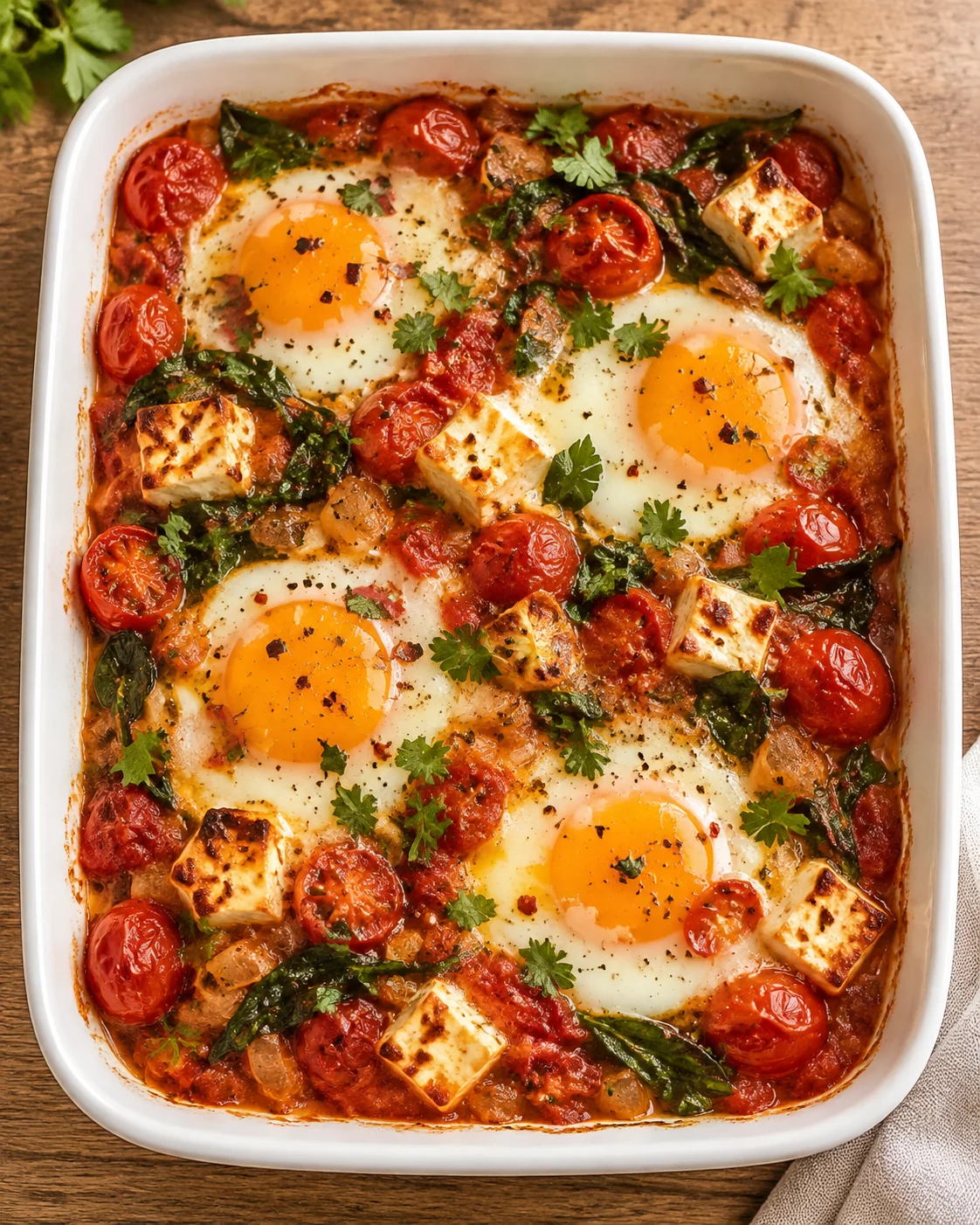
Mediterranean Baked Feta Eggs come out bubbling and creamy, with tomato juices soaking into the salty feta and spinach just wilting beneath soft-set eggs. When you dig in, you get the tang of roasted cheese, sweet pops of cherry tomato, and a spoonful of golden egg yolk in each bite. This makes a filling brunch for two, especially with a crust of bread to dunk.
Most Mediterranean Baked Feta Eggs break or overcook the yolks because everything goes in the oven at once. Here, the feta and vegetables get a head start in a hot oven: the cheese goes melty and the tomatoes burst, leaving just enough time to bake the eggs until silky but not hard. The result is fork-tender eggs with no watery bits and none of the rubbery white edges that happen when the cheese and eggs go in together.
Why You'll Love This Recipe
- Soft, creamy feta—no rubbery cheese. Baking the feta on its own first gives it time to soften and get almost spreadable, not spongy.
- Jammy roasted tomatoes. Cherry tomatoes burst open and sweeten after 6 minutes in a hot oven, so the eggs cook in flavorful juices instead of raw tomato water.
- Eggs baked just right. Adding the eggs only at the end keeps the yolks runny and the whites set—never tough, and never underdone.
- All in one skillet. The whole meal builds in a single pan you can take straight to the table, with zero separate sautéing or mixing bowls.
- Easy to tweak. Feta is flexible: leave out the spinach, add a pinch of chili, or swap in crumbled goat cheese for a tangier version.
Ingredients & Substitutions
Serves 2
- 120g (about 4 oz) feta cheese, crumbled into chunks — the dish depends on the feta's salt and melt; avoid pre-crumbled feta, which dries out and doesn't brown
- 1 cup (150g) cherry tomatoes, halved — grape tomatoes work, but larger tomatoes give off too much liquid and turn the eggs watery
- 2 cups (60g) baby spinach, roughly chopped — frozen spinach works if thawed and squeezed dry; swap in baby kale if needed, but mature kale stays chewy
- 1 tablespoon olive oil — use for flavor and to stop the cheese sticking; vegetable oil works, but lacks the classic taste
- 2 large eggs — medium eggs set up too firm in the baking time for this method
- 1/4 teaspoon dried oregano — fresh oregano gives a stronger punch, but go easy (1/2 teaspoon chopped)
- 1/4 teaspoon crushed red pepper flakes — skip this if you don't want heat, or use a pinch of smoked paprika for a sweeter flavor
- 1/8 teaspoon salt, plus more to taste — feta varies wildly in saltiness, so taste the cheese before adding extra
- 1/4 teaspoon black pepper — crack fresh for better aroma
How to Make Mediterranean Baked Feta Eggs
Step 1: Preheat the Oven
Set your oven to 400°F (200°C) and move the rack to the middle. The high heat helps the feta to brown and the tomatoes to burst. Starting with a cold oven gives tough cheese and underdone vegetables.
Step 2: Layer the Vegetables and Feta
Drizzle 1 tablespoon olive oil over the bottom of an 8-inch (20cm) oven-safe skillet or small gratin dish. Scatter the chopped spinach across the base. Pile on the halved cherry tomatoes and nestle the feta chunks evenly between them. Sprinkle with 1/4 teaspoon dried oregano, 1/8 teaspoon salt, and 1/4 teaspoon black pepper. If using, add 1/4 teaspoon crushed red pepper flakes now.
The pan will look crowded, but the spinach shrinks a lot as it cooks. Feta should be in bite-sized chunks, not fine crumbs—small bits melt out instead of softening.
Step 3: Bake the Base
Bake the skillet in the hot oven for 6 minutes. When you pull it out, the tomatoes should be starting to blister and the feta will look glossy with the edges just going golden. If the tomatoes are still firm, let it go one more minute; too soon, and the eggs will cook in raw juice.
Step 4: Add the Eggs
With the pan still hot, use the back of a spoon to make two shallow wells in the feta and spinach mix. Crack an egg into each well, aiming for the yolks to stay centered. The cheese and spinach hold the eggs in place so they bake up neat, not sliding everywhere.
Step 5: Bake Until the Eggs Are Set
Return the skillet to the oven and bake 6–9 minutes, just until the egg whites turn opaque and set but the yolks still wobble if you gently shake the pan. Start checking at 6 minutes for runny yolks, 8 minutes if you like them just turning creamy. Feta on the edges should have picked up a little golden color; too brown, and it’s overdone.
Step 6: Rest and Serve
Take the pan out and let it stand for 5 minutes. The eggs finish setting in the residual heat, and the cheese firms up enough to pick up with a fork. Trying to serve straight from the oven leaves the eggs loose and the cheese impossible to move.
Serve the baked feta eggs right from the pan, with bread for scooping up every bit of yolk and tomato juice. This is best hot, but leftovers can be cooled quickly, stored airtight, and reheated gently the next day.
How to Serve Mediterranean Baked Feta Eggs
Mediterranean Baked Feta Eggs come bubbling and fragrant from the oven, rich with tomato and spinach, and made for eating right away. Here’s how to serve them so you keep the yolks creamy and the feta soft.
Serving Ideas
- Slice-and-lift portions work best once it’s rested 5 minutes. The eggs keep their shape for neat slices with a metal spatula, and the cheese firms up just enough to hold together on the plate.
- Warm, not scalding. Wait the full 5 minutes before cutting in — the center holds heat, and eggs serve best when the whites have set but the yolks are still molten.
- Brunch centerpiece. Bake this in a small skillet and bring it straight to the table on a wooden board. The iron dish keeps the eggs warm for a good 15 minutes, so latecomers aren’t punished with cold cheese.
- Packed for lunch. Cool completely, then pack in an airtight container with a wedge of lemon. The yolks will set a little further on chilling but come back to life after a gentle reheat in a microwave at 50% power for 30–40 seconds.
What to Serve Alongside
- Toasted sourdough — The chewy crumb soaks up runny yolks and tangy tomato juices, and a good crust stands up to scooping bites from the pan.
- Crisp cucumber salad — A quick salad with lemon juice and dill brings freshness and crunch. That sharpness balances the richness of the feta and eggs.
- Olive tapenade — Just a tablespoon per serving brings a salty, punchy contrast to soft eggs, without overwhelming the subtle greens.
- Chilled orange wedges — Cold, sweet citrus cuts through the savory cheese and adds a palate refresher between bites.
- Za’atar-spiced potatoes — Roast bite-sized potatoes tossed in olive oil and za’atar at the same temperature as your eggs. Their earthiness fills out the meal without duplicating flavors.
- Pickled red onions — Just a few rings lend tang and color that stand out against the creamy, warm base of the Mediterranean Baked Feta Eggs.
 Pin it
Tips for the Best Mediterranean Baked Feta Eggs
The secret to Mediterranean Baked Feta Eggs is timing: bake the base until the feta melts and the tomatoes soften, then nestle in the eggs for just long enough to set the whites and leave the yolks runny. Every detail matters to make this a crave-worthy vegetarian egg meal.
- Pre-bake the feta and vegetables for 8 minutes before adding eggs. If you add eggs to cold feta, they’ll need so long to cook that the cheese turns tough and the tomatoes weep water.
- Crack eggs into a small bowl first. This lets you slide each egg where you want it without breaking the yolks, and avoids picking out stray shell right over the hot pan.
- Salt sparingly — 1/8 teaspoon in the spinach mix is plenty. Feta brings a major briny kick. More salt here will end up making the finished dish taste harsh and over-seasoned.
- Watch for whites just set and yolks still jiggly. At 400°F, this takes 12–15 minutes. If you wait until the yolks look firm, they’ll be solid by the time you serve. The eggs keep cooking slightly as the dish rests.
- Drain excess tomato juice before layering. If your chopped tomatoes are especially juicy, pour off a little liquid before baking. Too much water in the pan leaves watery eggs.
- Use block feta, crumbled by hand. Pre-crumbled feta is drier and less creamy. Chunky, hand-crumbled pieces melt into the vegetables without disappearing entirely.
- Skip broiling the top unless you want firmer yolks. The base bakes uncovered and will naturally brown around the edges. If you broil to darken the cheese, yolks will set almost solid within a minute — only do this if you want them hard-cooked.
How to Store Mediterranean Baked Feta Eggs
Best served straight from the oven, Mediterranean Baked Feta Eggs will keep in the refrigerator for up to 1 day if you have leftovers. The eggs set further as they sit, and the feta firms up, so plan to eat them soon after baking for the best texture.
Refrigerator
- Cool the eggs at room temperature for no more than 30 minutes before transferring. Slide them with a spatula into an airtight container, laying parchment between layers if you made more than a single layer.
- Keeps well for up to 1 day. After that, the eggs take on a rubbery texture, and the spinach and tomatoes weep liquid that makes the bottom soggy.
- If the feta appears dry or chalky or the dish smells sour, it has passed its best.
Freezing Mediterranean Baked Feta Eggs
- Freezing makes the egg whites tough and ruins the creamy texture of the feta. They are best baked fresh.
- If you must freeze them, wrap portions tightly in plastic and foil. Freeze for up to 1 month.
- Thaw in the refrigerator overnight and expect extra moisture—blot with a paper towel before reheating. The taste and texture degrade, so only freeze if there is no other option.
Reheating Mediterranean Baked Feta Eggs
- Use a 325°F (160°C) oven. Place the eggs in an oven-safe dish, cover loosely with foil, and heat for 8-10 minutes until the feta is warm and the eggs are hot to the touch. High heat toughens the eggs, so keep it gentle.
- For a single serving, microwave at 50% power in 30-second bursts, checking each time. Stop as soon as the whites are heated through. Too long turns the yolks chalky.
- Do not reheat more than once. If the eggs turn rubbery or the cheese looks separated, they’ve gone too far.
Frequently Asked Questions
Mediterranean Baked Feta Eggs are straightforward but have a few quirks that come up often in the kitchen. Here’s what most home cooks want to know before baking.
Can I make Mediterranean Baked Feta Eggs ahead of time?
You can prep the spinach, tomatoes, and feta mixture the night before. Keep it covered and chilled. Crack the eggs on top just before baking—baked eggs lose their creamy yolks if held too long, so this keeps the texture right.
Why did my baked feta eggs come out watery?
Tomatoes give off a lot of liquid as they bake. If the pan looks soupy before adding the eggs, spoon out some juice or let the vegetables bake for two minutes longer before cracking the eggs in. Crowding the pan or using extra-large tomatoes can also make it too wet.
Can I double or halve this Mediterranean Baked Feta Eggs recipe?
You can halve the recipe to serve one; use a small ramekin or an oven-safe bowl so the eggs sit in a shallow layer. To double, use a 10-inch skillet and check at 12 minutes—larger sizes sometimes need a minute or two more but watch closely so the yolks don't set solid.
What can I use instead of feta in Mediterranean egg recipes?
For a similar tang, goat cheese works but melts more fully than feta. Ricotta stays soft but is milder and less salty, so add a pinch of salt. Halloumi will not soften the same way; avoid it unless you like a chewy result.
Are Mediterranean Baked Feta Eggs vegetarian?
Yes, this is a true vegetarian egg meal—no meat, fish, or animal rennet in sight. To be certain, choose feta labeled as vegetarian, since some brands use animal-based rennet.
Final Thoughts
Mediterranean Baked Feta Eggs are quick to pull together and satisfying enough for breakfast, lunch, or a simple supper. Baked tomatoes, spinach, and creamy feta soak up the olive oil and turn out savory and fresh. Add chopped olives for a briny twist, switch spinach for chard, or swap in roasted peppers if you need to use up what’s in the fridge. This baked egg skillet always comes out comforting and packed with flavor—try it as written first, then make it your own.